Skip to content
Center of
Trial & Error

Center ofTrial & Error.

Creating transparent and responsible scholarship.

We are a non-profit organization experimenting with innovative publishing activities. The Center provides a space for independent reflection on academic practice and stimulates students and early career researchers to disrupt existing scholarly infrastructures.

From the Blog

All posts
Behind the Scenes

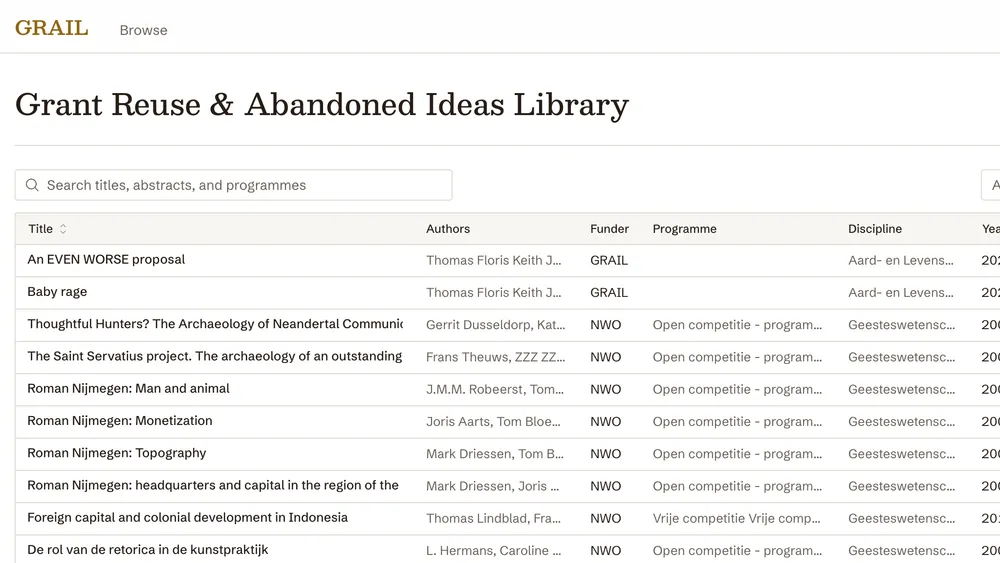
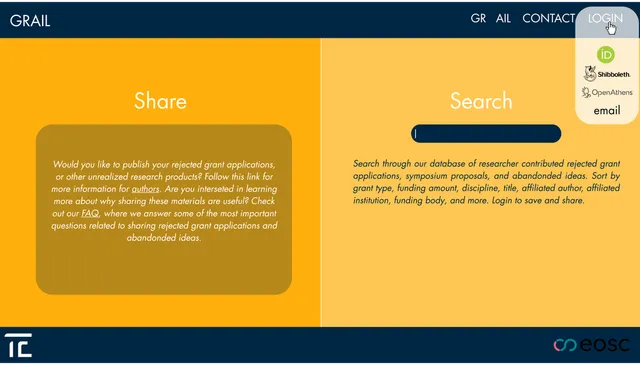
GRAIL EOSC Gravity Update Month 3 and 4

By Maura Burke

Relatedly, we spent some time thinking about how GRAIL could best fit into the existing EOSC Node landscape. Maybe it would be best for us to be a part of a larger, national network of Nodes?

Read

Behind the Scenes

GRAIL EOSC Gravity Project Month 1 and 2 Update

By Maura Burke

If we hope researchers will share rejected grant applications or other unrealized research materials, then greater recognition of their scholarly value will also be necessary.

Read
Culture of Trial and Error

Cultures of Trial and Error: The Narrative Side of (Open) Science

By Sheena F. Bartscherer

Heterogenous communities with explicit commitments to science corrections or what this blog series summarises under the descriptor ‘cultures of trial and error’ have existed for the longest time.

Read

From the Journal

All articles
Meta-Research

Persuasion in Scientific Journal Articles: Exploring Persuasiveness and Informativeness among Authors and Readers

Rrita Bajraktari & Marcus Munafò

Scientific communication is often assumed to prioritize objectivity, yet persuasive strategies may subtly distort research interpretation. While the spread of errors in research is often attributed to methodological or statistical biases (Świątkowski & Dompnier, 2017), rhetorical strategies are less…

doi:10.36850/b364-4157Read
Meta-Research

A Conceptual Framework for Computational Reproductions: Formal Definitions and Epistemic Functions

Florian Kohrt, Filip Melinscak, Richard McElreath & Felix Schönbrodt

Reproductions, which we define as “redoing activities” that work with the same collected data (or simulation source code) and aim to keep the computation as similar as possible, enable the verification of a scientific work. We seek to advance the understanding and conduct of reproductions by…

doi:10.36850/9ec0-4fabRead
Anecdotes

Novel Cell Motility of Protozoa Living in the Hindgut of Termites

Sidney L. Tamm

A remarkable symbiotic protozoan in the hindgut of termites was accidentally discovered. Its head and body continuously rotated in opposite directions without stopping or reversing directions. Rotations included the plasma membrane of each part of the cell, and the membrane was continuous across the…

doi:10.36850/94da-4482Read
Empirical

Technical Note: A GBLUP to Produce ssGBLUP Solutions for Genotyped Animals

Mohammad Ali Nilforooshan

Nowadays, single-step genomic best linear unbiased prediction (ssGBLUP) is the most popular methodology for livestock genetic evaluation. It simultaneously evaluates genotyped and nongenotyped animals using an augmented genotype and pedigree relationship matrix. In most livestock species, a small…

doi:10.36850/429a-ac1dRead
Meta-Research

How to Get There From Here? Barriers and Enablers on the Road Towards Reproducibility in Research

Serge P. J. M. Horbach, Nicki Lisa Cole, Simone Kopeinik, Barbara Leitner, Tony Ross-Hellauer & Joeri Tijdink

Reproducibility of research is a hotly debated topic, including aspects like causes and consequences of low levels of reproducibility. While some research fields have led the way and introduced various reproducibility practices and procedures, the call for efforts to ‘improve’ reproducibility in…

doi:10.36850/f4c4-4a38Read
Meta-Research

The Open Science Platforms Fighting Clandestine Abuses of Piracy and Phishing: Case of Open Science Framework

Ayumi Ikeda, Fumiya Yonemitsu, Naoto Yoshimura, Kyoshiro Sasaki & Yuki Yamada

The Open Science Framework (OSF) is a free and open-source platform for managing research projects (Elliott et al., 2021). The OSF is a flagship product of the Center for Open Science, Inc. (COS), whose mission is to increase the openness, integrity, and reproducibility of scientific research. It is…

doi:10.36850/57fe-4c10Read

What do we do?

01

Discussing

We define “trial and error” as methodological flaws and conceptual errors in research. The Center facilitates a reflective discussion on these issues with our blog and by encouraging empirical research and cross-disciplinary conceptual work.

02

Publishing

We aim to publicize the lessons of research struggles, publish answers to the question “what went wrong?”, and independently host non-profit pre-press services. The Journal of Trial and Error is dedicated to this mission.

03

Training

Institutional change results from well-equipped young people, creating a mass from below. We focus efforts to educate students on the systemic and organisational structures of science and scholarship to make change a practical reality.

Subscribe to our newsletter!

Keep up to date with the Blog, the Center and the Journal of Trial & Error.